





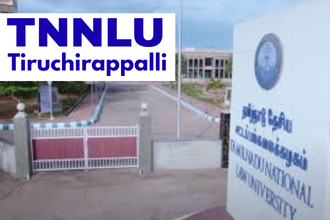


Tamil Nadu National Law University (TNNLU), established in 2012 by the Government of Tamil Nadu, is one of India’s second-generation National Law Universities. Located in Tiruchirappalli, the university has steadily developed into a reliable mid-tier NLU offering structured legal education, strong litigation exposure opportunities, and a supportive academic environment for judiciary aspirants.
The university follows a fully residential model and currently offers BA LL.B (Hons.), B.Com LL.B (Hons.), LL.M, and Ph.D programmes. Among CLAT preference-list options, TNNLU is especially relevant for students interested in litigation practice, judicial services preparation, constitutional law, and South India corporate compliance roles.
About the City: Tiruchirappalli


Tiruchirappalli, commonly known as Trichy, is one of Tamil Nadu’s major educational centres and provides a calm academic environment compared to metropolitan campuses. The city offers moderate living costs, safe surroundings, and strong rail, road, and air connectivity to Chennai, Madurai, Bengaluru, and Coimbatore.
Although Trichy itself is not a corporate legal hub, its proximity to Chennai significantly improves internship access. Students frequently intern with litigation chambers, corporate offices, and compliance teams located there. The city’s academic atmosphere makes it particularly suitable for students preparing for judicial services examinations.
Nearby travel destinations such as Srirangam, Rockfort Temple, Kallanai Dam, Ooty, and Kodaikanal also contribute to a balanced campus lifestyle.
Why TNNLU Is a Strong CLAT Preference Option
Among second-generation NLUs, TNNLU offers a balanced mix of affordability, litigation exposure, and academic discipline. It is especially suitable for students interested in:
- judicial services preparation
- constitutional and criminal litigation
- South India practice exposure
- corporate compliance roles
- affordable National Law University education
For CLAT rank holders between approximately 1200 and 2500, TNNLU represents a strategically strong preference-list choice.


Courses Offered at TNNLU
TNNLU offers two integrated undergraduate programmes designed for different career orientations.
| Programme | Duration | Annual Intake |
|---|---|---|
| BA LL.B (Hons.) | 5 Years | 60 |
| B.Com LL.B (Hons.) | 5 Years | 60 |
The BA LL.B programme combines social sciences with legal training and is suitable for students interested in litigation, judiciary, policy, and academia. The B.Com LL.B programme integrates commerce, accounting, and finance with law and is particularly useful for corporate law careers.
At the postgraduate level, LL.M programmes are offered in Constitutional Law and Corporate Law depending on academic cycles. The university also offers Ph.D opportunities in interdisciplinary legal research areas.
Admission Process
Admission to undergraduate programmes is conducted through CLAT counselling. Selection depends on CLAT rank, category reservation, and domicile eligibility.
| Category | Minimum Marks Required |
|---|---|
| General / OBC | 45% |
| SC / ST | 40% |
Tamil Nadu domicile reservation plays an important role in determining final seat allocation.
Seat Intake and Reservation Structure
Total undergraduate intake each year is approximately 120 seats across both integrated programmes.
| Category | Approximate Seats |
|---|---|
| All India General | 60 |
| Tamil Nadu Domicile | 35 |
| Scheduled Castes | 18 |
| Scheduled Tribes | 7 |
| PwD | Horizontal |
Because of domicile reservation, Tamil Nadu candidates may secure admission at comparatively higher CLAT ranks.
CLAT Closing Rank Trends
Recent admission patterns generally fall within the following approximate ranges:
| Category | Rank Range |
|---|---|
| General | 1500 – 2200 |
| OBC | 3500 – 6000 |
| SC | 7000 – 11000 |
| ST | 12000+ |
| Tamil Nadu domicile | Up to ~6000 |
These ranges vary each year depending on counselling dynamics.

Fee Structure (Year-Wise Estimate)
TNNLU remains moderately priced compared to several newer NLUs and private law schools.
First Year Expenses
| Component | Amount |
|---|---|
| Tuition Fee | ₹2,00,000 |
| Admission Charges | ₹25,000 |
| Library Deposit | ₹10,000 |
| IT Infrastructure | ₹15,000 |
| Hostel and Mess | ₹75,000 |
| Total | ₹3,00,000 approx |
Second to Fifth Year Expenses
| Component | Amount |
|---|---|
| Tuition Fee | ₹2,00,000 |
| Hostel and Mess | ₹75,000 |
| Miscellaneous Charges | ₹15,000 |
| Total | ₹2,90,000 approx |
Semester-Wise Academic Structure (BA LL.B and B.Com LL.B)
The curriculum progresses from foundation subjects to advanced specialization and professional training.
Year 1
Semester 1
Students are introduced to foundational humanities or commerce subjects along with introductory legal reasoning. Typical subjects include Legal Methods, Political Science or Financial Accounting, Sociology or Business Studies, English, and Constitutional Law foundations.
Semester 2
The focus expands to include Law of Torts, Economics or Business Economics, and continuing constitutional law study. Students begin developing case-reading skills and legal writing ability.
Year 2
Semester 3
Core doctrinal subjects begin. Students study Contract Law I, Criminal Law I, Family Law I, and Public International Law along with programme-specific interdisciplinary subjects.
Semester 4
Contract Law II, Criminal Law II, and Family Law II are introduced. At this stage students begin structured exposure to procedural reasoning and statutory interpretation.
Year 3
Semester 5
Subjects include Jurisprudence, Property Law, Administrative Law, and Company Law. Students begin engaging with theoretical foundations of legal systems and governance.
Semester 6
Advanced company law components, constitutional interpretation themes, and procedural law exposure continue. Research papers and presentations often begin during this phase.
Year 4
Semester 7
Students study Environmental Law, Labour Law, Intellectual Property Law, and Alternative Dispute Resolution. These subjects introduce regulatory frameworks shaping modern legal practice.
Semester 8
Taxation Law and Civil Procedure Code become central components. Students also begin selecting electives aligned with career interests such as corporate governance or human rights law.
Year 5
Semester 9
Professional training intensifies through Drafting, Pleading and Conveyancing, Professional Ethics, seminar papers, and advanced electives.
Semester 10
The final semester includes moot court exercises, dissertation work, internship credits, and specialization-oriented optional subjects preparing students for professional practice.
Campus Infrastructure and Facilities


The campus includes academic blocks, a central library with major legal databases, seminar halls, hostels, and sports infrastructure. Library access includes leading law reports and research tools essential for mooting and academic writing.
The residential structure ensures strong peer learning culture and regular interaction between students and faculty members.
Hostel Life and Residential Environment
Separate hostels are available for male and female students within the campus. Facilities include internet connectivity, reading rooms, indoor games, sports spaces, and structured dining services. The compact campus environment supports collaborative learning and committee participation throughout the academic year.
Student Committees and Academic Engagement
Student committees form the backbone of experiential learning at TNNLU. Major committees include Moot Court Committee, ADR Committee, Legal Aid Committee, Internship Committee, Cultural Committee, Debate Society, and Sports Committee.
These committees organise competitions, workshops, awareness campaigns, conferences, and outreach programmes that help students develop advocacy, leadership, and research skills.
Major Festivals and Events
The annual cultural festival Jus Festum includes debates, music events, literary competitions, and inter-university participation. National seminars, ADR competitions, and legal aid camps are organised regularly and provide important platforms for skill development and networking.
Internship Opportunities
Although Trichy itself is not a corporate legal centre, proximity to Chennai significantly improves internship access. Students regularly intern with High Court advocates, corporate legal departments, compliance teams, NGOs, and research organisations across Chennai, Bengaluru, Hyderabad, and Delhi.
Internship performance at TNNLU depends largely on student initiative, but motivated candidates consistently build strong litigation and corporate exposure profiles.
Moot Court Culture
Mooting forms an important component of legal training at TNNLU. Students participate in internal selection rounds, national moot competitions, ADR tournaments, and trial advocacy exercises. These activities play a major role in preparing students for litigation careers.
Placement Scenario
Placements at TNNLU remain primarily litigation-oriented with gradual improvement in corporate recruitment.
| Category | Package Range |
|---|---|
| Average | ₹5 – 8 LPA |
| Highest | ₹12 – 16 LPA |
Recruiters typically include litigation chambers, regional law firms, consulting organisations, and corporate compliance teams. Many litigation careers show substantial income growth after initial practice years.
Career Opportunities After Graduation
Graduates commonly pursue careers in litigation practice before High Courts, judicial services preparation, corporate advisory roles, postgraduate legal education abroad, public policy research fellowships, and academic teaching.
The university is particularly suitable for students preparing for Tamil Nadu Judicial Services examinations.
Who Should Prefer TNNLU
TNNLU is especially suitable for:
- CLAT rank holders between 1200 and 2500
- students interested in litigation careers
- judiciary aspirants
- candidates preferring South India professional exposure
- students seeking affordable National Law University education
Who Should Not Prefer TNNLU
Students primarily targeting Tier-1 corporate law firm placements, metro campus exposure, or extensive international exchange opportunities may prefer higher-tier NLUs depending on their CLAT rank.
Final Verdict for CLAT Aspirants
Tamil Nadu National Law University offers strong academic discipline, growing infrastructure, and reliable litigation exposure at a moderate fee level. For students interested in judiciary preparation, constitutional law, and South India legal practice, it represents a strategically sound and dependable preference-list option.